Log fast, between sets
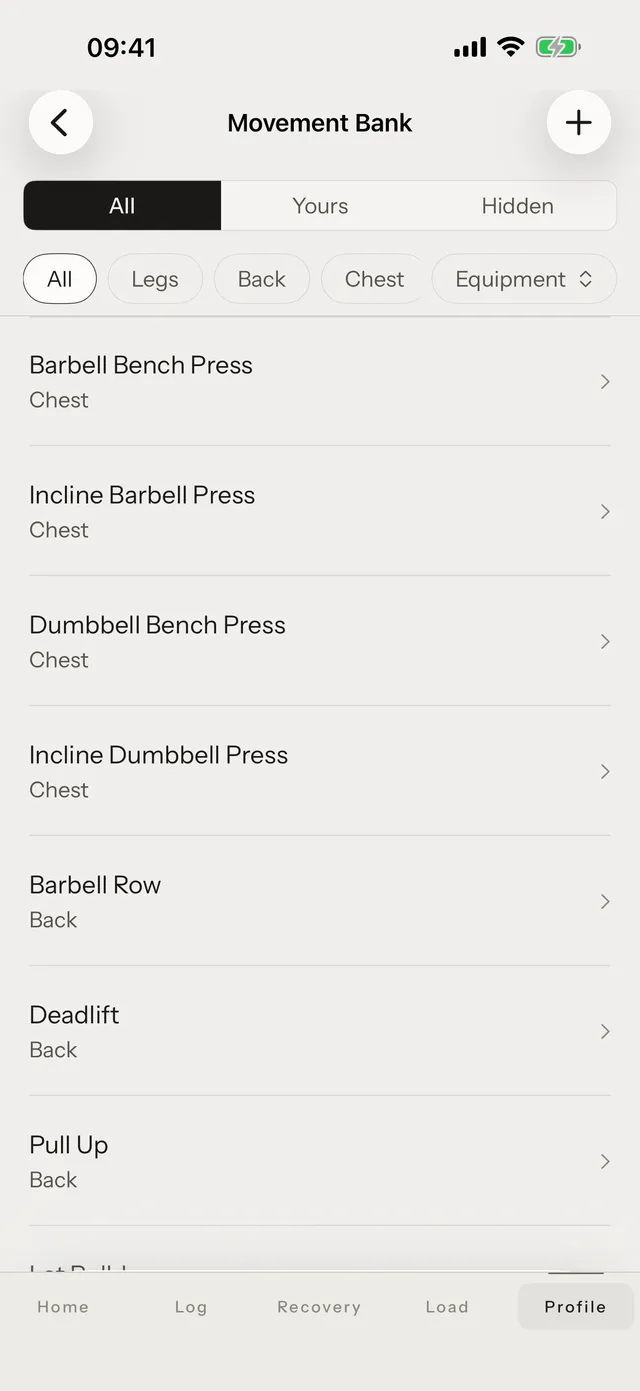
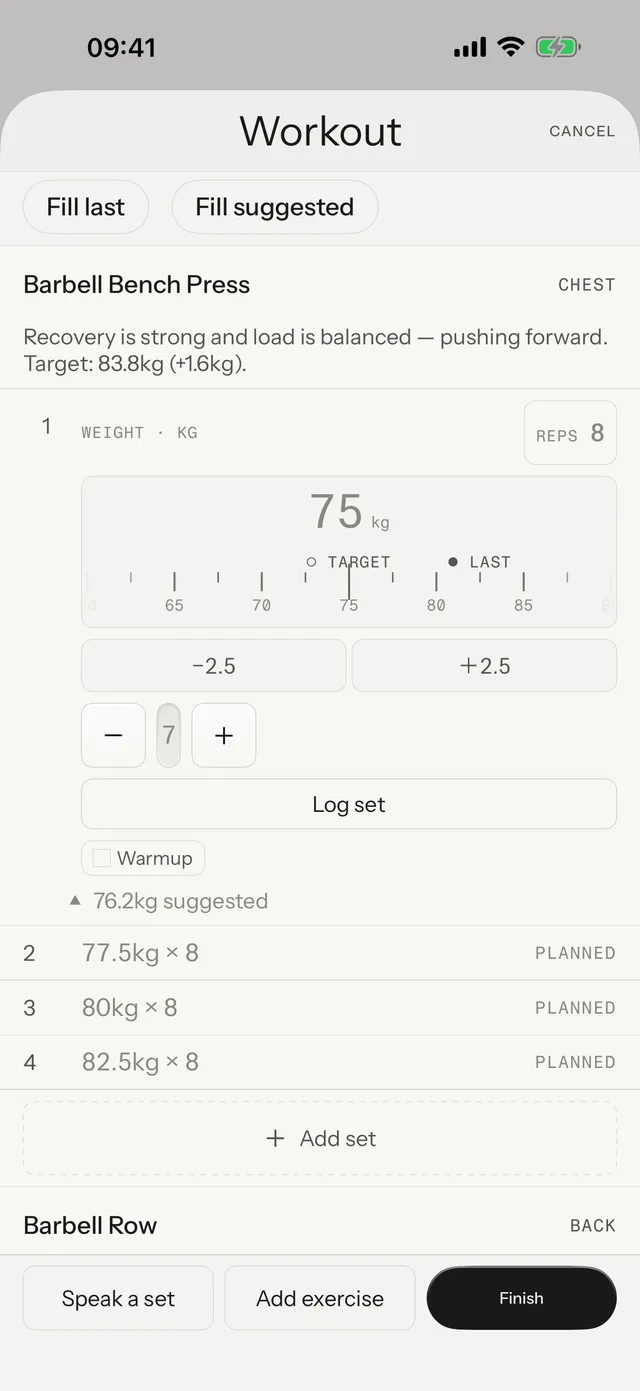
A 1,324-exercise movement bank behind a search-first picker. Weight, reps, done — logging built for chalk-covered thumbs, so the record keeps up with the session instead of slowing it down.
Plan, log, and history in one place
Build the strength sessions you already believe in: lower-body strength after skill work, upper-body lifts between pickup nights, or a simple two-day template around your league schedule. Each session can carry target sets, rep ranges, planned top-set weight, RPE caps, and notes.
Actual work is recorded beside the target: set, reps, load, RPE, and reps in reserve. That planned-versus-actual trail is what lets Tuwa connect your own programming to the next readiness verdict.
Structure the plan, keep the authorship
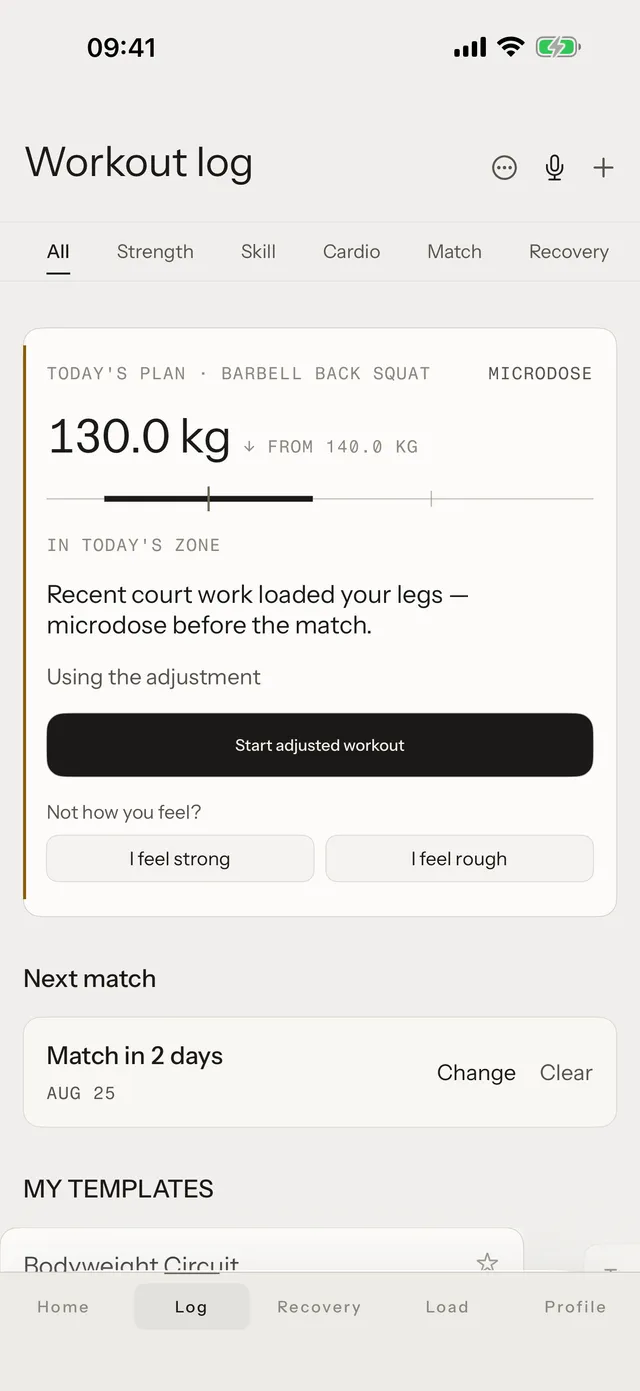
When you open the planned session, Tuwa has enough structure to answer the only useful question: is this still the right dose today? The app can suggest the planned top set, an adjusted number, or a capped microdose without inventing a different workout.
No chat coach, no generated program. Use Tuwa as the sports-science back room for the plan you authored. It sits between planning and execution: quiet enough for the weight room, structured enough to make the day's adjustment specific.
Templates persist over time, so you can review how actual lifting moved against the plan — and Tuwa tracks personal records and session history so the back-room view is not only about caution.
Common questions
How big is the movement bank?
A 1,324-exercise movement bank behind a search-first picker. Find the movement, log the set, get back to the bar.
What can a template carry?
Each session can carry target sets, rep ranges, planned top-set weight, RPE caps, and notes — the strength sessions you already believe in, structured enough for the day’s adjustment to be specific.
Does Tuwa generate workouts for me?
No. No chat coach, no generated program. Tuwa is the sports-science back room for the plan you authored — it sits between planning and execution.
How fast is logging mid-session?
Weight, reps, done — logging built for chalk-covered thumbs, so the record keeps up with the session instead of slowing it down.
How does the log connect to the daily verdict?
Actual work is recorded beside the target: set, reps, load, RPE, and reps in reserve. That planned-versus-actual trail is what lets Tuwa connect your own programming to the next readiness verdict.
Keep your plan. Adjust the day.
Download Tuwa to bring your own plan, check today's verdict, and adjust the top set before you train.